Last Updated on 2026 年 4 月 14 日 by Ching
This Cebu trip left me most awestruck by visiting Oslob for whale shark watching. The Oslob whale shark interaction is a classic must-do Cebu itinerary, highly recommended by friends who have been there! The small fishing village of Oslob is famous for its whale sharks, not only revitalizing the tourism economy but also making Oslob an internationally renowned tourist town in Cebu.
Getting up close to these adorable and gentle ocean giants was an interaction I believe everyone should experience at least once in their lifetime!
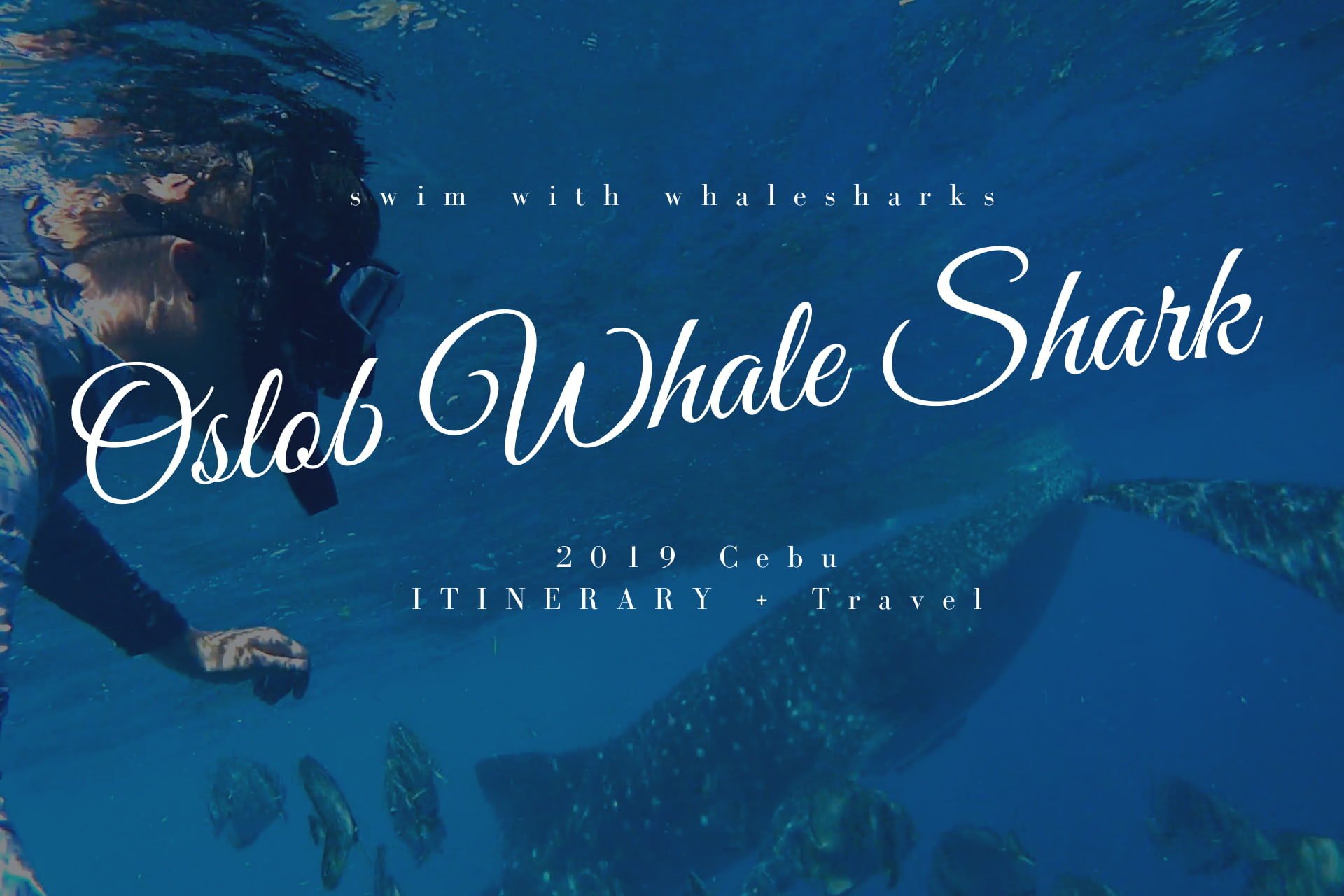
This article is my Cebu self-guided travel record of the whale shark interaction, including insights from the Cebu whale shark day tour: Introduction to Oslob whale sharks, Oslob transportation, and costs and precautions for the whale shark interaction. I hope to provide some travel information for everyone!
- Before we begin, the controversy surrounding Cebu’s whale shark interaction
- Introduction to Oslob Whale Shark Village
- How to get to Oslob Whale Shark Village? Departing from Dumaguete
- Ticket purchase and equipment rental
- Training and rules before entering the water
- Swimming with the whale sharks in Oslob!
- Swimming with Whale Sharks in Cebu
- 宿霧熱門行程預訂
精選鯨鯊浮潛、沙丁魚風暴與跳島一日遊
Before we begin, the controversy surrounding Cebu’s whale shark interaction
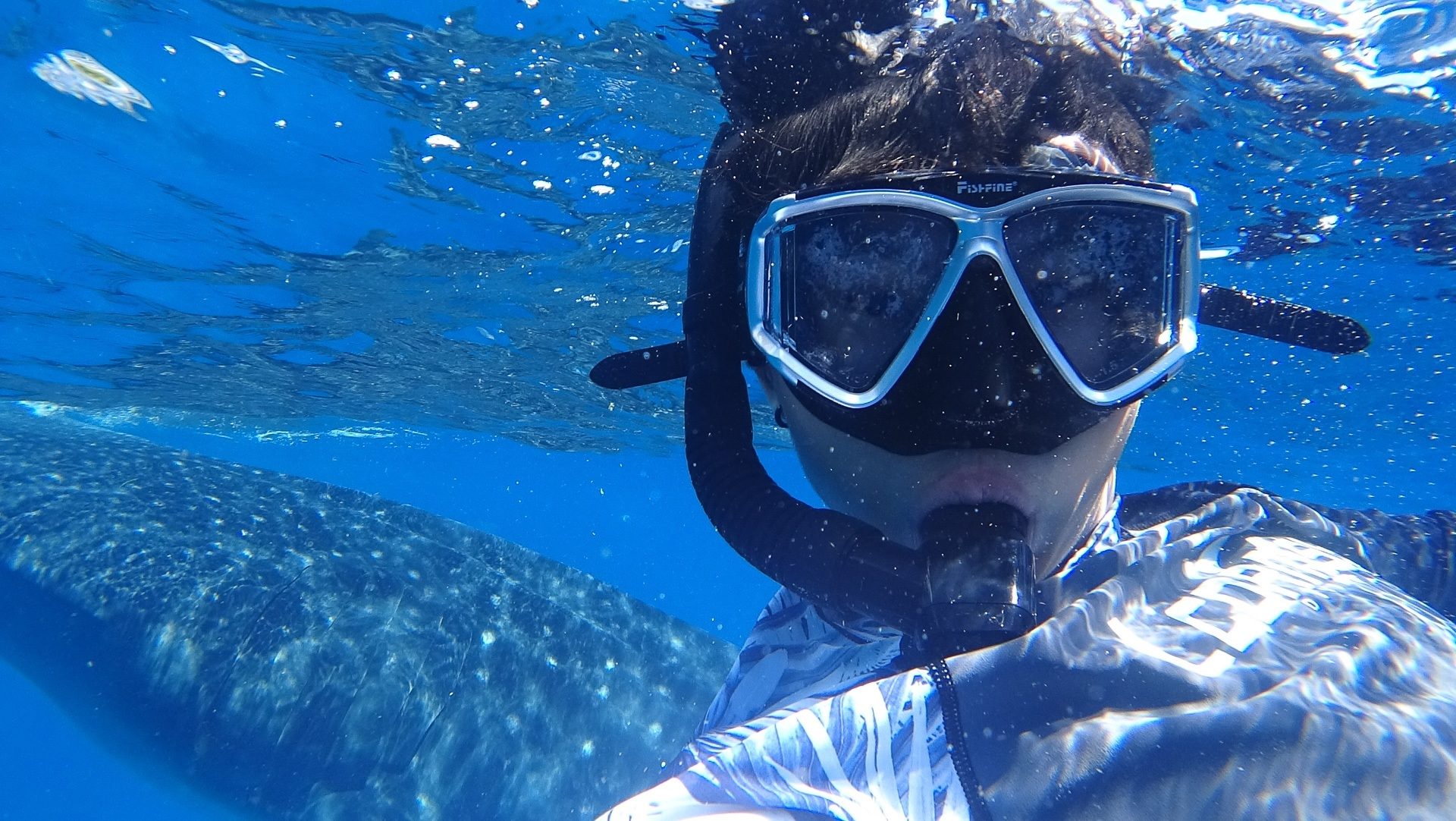
Before setting off for swimming with whale sharks in Cebu, I only had the expectations of a traveler.
I thought seeing the world’s largest shark, known as the “giant of the sea,” would be a once-in-a-lifetime experience. It wasn’t until after swimming with the whale sharks and chatting with the hostel owner that I learned there is actually some controversy surrounding the practices at the Oslob Whale Shark Village.
Reasons not to visit Oslob for whale shark watching
Online, you can find several reasons urging tourists not to visit Cebu for whale shark watching. These include concerns that it causes whale sharks to become “residents” there. Whale sharks are highly migratory fish, but human feeding has led them to abandon migration. The record is a whale shark named “Mr. Bean,” which stayed in this small fishing village for 392 days.
Another issue is the change in feeding behavior. During our visit, we saw many whale sharks feeding “vertically,” which is very different from the horizontal, filter-feeding method we imagine. A more discussed issue is malnutrition; because the local feeding involves a single item (krill), the whale sharks get full and don’t seek other food, potentially leading to an imbalanced diet over time. Scientists have observed that Oslob’s whale sharks are slightly smaller than their wild counterparts.
Does that mean we shouldn’t see the whale sharks?
It’s hard to say. This article is also about sharing our experience of seeing the whale sharks, not telling everyone not to go. I don’t believe a complete ban can solve the problem. In the past, Oslob’s fishermen used to hunt whale sharks for profit! Later, the whale sharks brought about tourism benefits, enriching this small fishing village and greatly improving local living conditions, healthcare, and education, helping the local people. They even established a marine sanctuary.
From this Oslob whale shark watching experience, it is evident that the local government provides comprehensive educational briefings before tourists enter the water, limits the daily time and number of people allowed in the water, and imposes fines for touching, all to balance tourism and ecology. As travelers, we cannot deny that Oslob’s 100% whale shark guarantee tour is very appealing, but we must adhere to traveler etiquette: choose certified whale shark snorkeling operators, do not touch the whale sharks, move gently, and follow the boatman’s instructions to minimize harm to the whale sharks during such tours.
Reference: FB group & this very detailed article (highly recommended): Does feeding whale sharks disrupt their habits? Promoting local industry transformation to tourism? This topic continues to be discussed
Introduction to Oslob Whale Shark Village
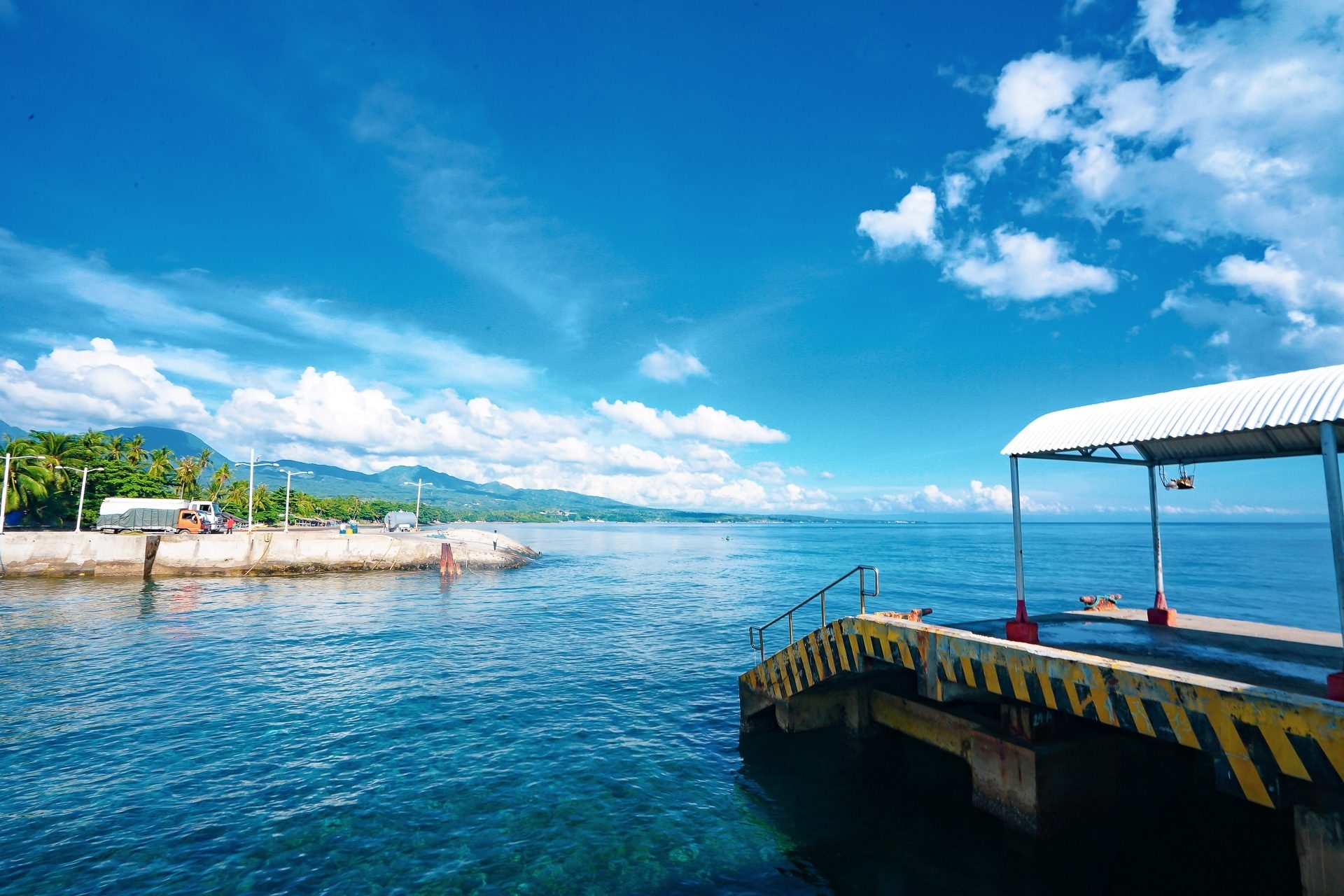
As mentioned above, Oslob Whale Shark Village was once an extremely impoverished small fishing village located southeast of Cebu Island. The villagers lived by fishing until a foreigner paid them to take him to see the whale sharks. The villagers realized this could be a new livelihood (easier and more profitable than before), gradually developing into a tourism-dependent village and becoming a major highlight of Cebu tourism. Each year, Oslob attracts tens of thousands of tourists to Cebu, gradually improving the daily lives of the villagers.
How to get to Oslob Whale Shark Village? Departing from Dumaguete
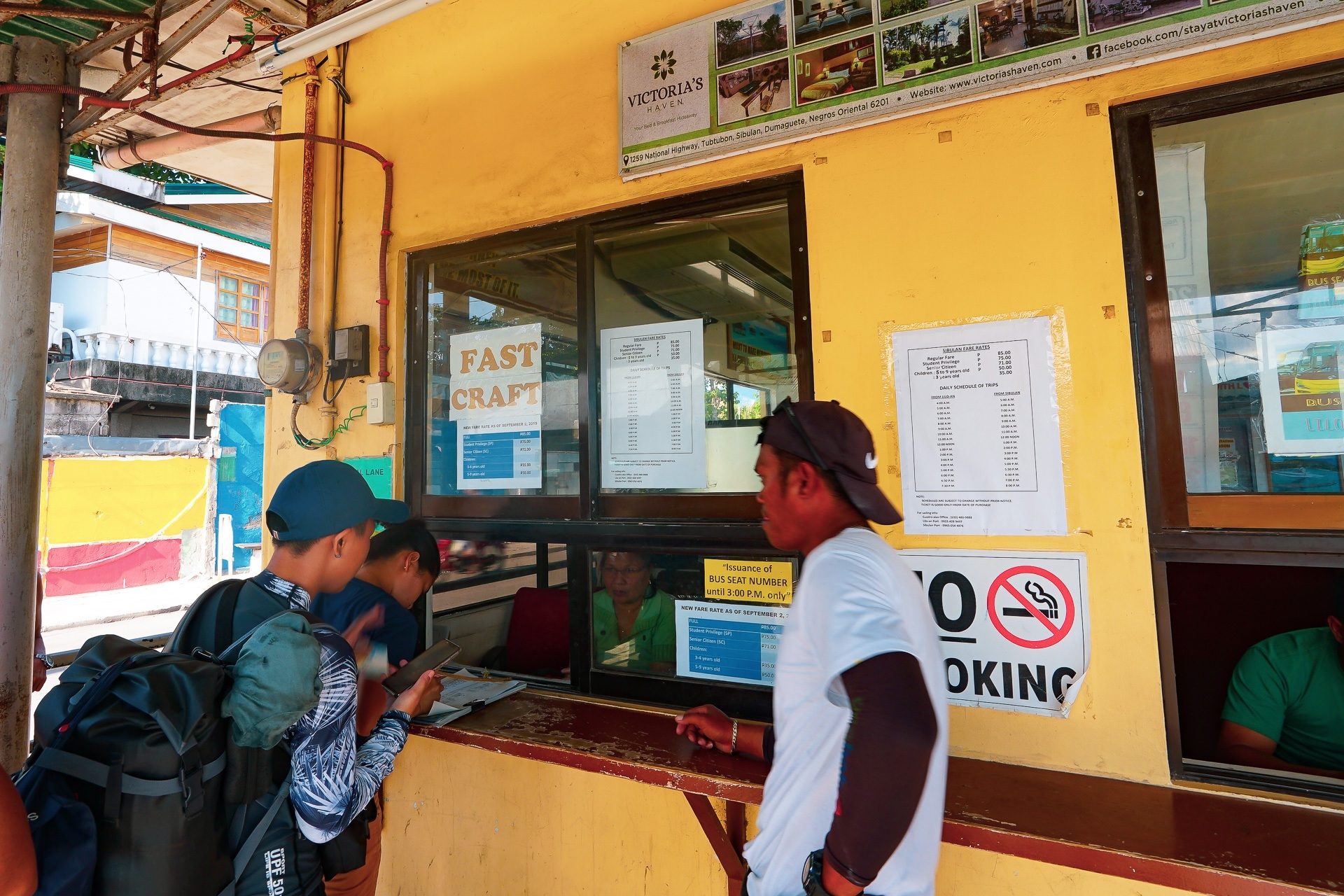
There are many guides online for trips starting from Cebu City (a 3-4 hour drive), but this one is about traveling from Dumaguete to Oslob to see whale sharks, which only takes 1.5 hours. With our clockwise circuit route, you don’t have to wake up early and can leisurely enjoy breakfast XD.
1. Take a tuk-tuk from Dumaguete City to Sibulan Port Terminal1 (fare 120P)
2. Take a speedboat to Liloan Port1 (ticket 75P)
3. Take a bus to the whale shark village (ticket 50P)

After having breakfast at the hotel in Dumaguete City that day, we took a tuk-tuk directly to the Sibulan Port Terminal to buy tickets.
For some reason, during our six days in Cebu, this was the only port where no one queued up. While I was filling out the ticket information, everyone kept cutting in line to ask questions, squeezing me in the middle.

Finally finished shopping and came out with a grumpy face XD (actually because my backpack was heavy). The fare to Liloan Port on the opposite side is only 70P. Once you buy the ticket, someone will guide you to board the boat.

The speedboat from Sibulan Port Terminal to Liloan Port takes about 20 minutes. It’s a small boat, much smaller than the one from Bohol to Cebu Island, and it’s more wobbly. Friends who get seasick should remember to take motion sickness pills.

The speedboat was very full that day, almost at capacity, with about 80% locals on board and not many tourists (judging by their attire). It’s speculated that this route is less traveled, as most tourists usually hire a car from Cebu City.

Upon arriving at Liloan Port, we immediately saw a bus with ‘Oslob’ written on it. After confirming with the driver that it goes to the whale shark village, we quickly boarded (forgot to take a picture of the bus exterior).

The journey from the port to the whale shark village takes about 20 minutes, leading to this Aloha Whale Shark Dive Shop. It’s not the yellow signboard mentioned by netizens, but the bus driver dropped us off here and recommended it, so we went right in.
Ticket purchase and equipment rental

As soon as you enter, it’s all about negotiating prices, just like what I found online. Going into the water costs 1000P per person, and table and chair equipment is 200P. I brought my own Sony action camera, so I didn’t rent one (renting costs 550P each time).
There are very few tourists here, which made me a bit nervous, wondering if it would be disappointing. However, the lady at the counter was very friendly, and another guy there spoke a little Chinese.

After changing clothes and securing our luggage, we walked to the beach to wait for the foreign tourists who were assigned to our group. You can see there are many tourists here, with lots of crab boats on the sea.
Training and rules before entering the water

Before entering the water, the dive shop guy took us to the training area for a brief lecture (explained in English, but with simplified Chinese instructions). It mainly covered the precautions for entering the water, advising everyone to move gently, avoid kicking the whale sharks, and most importantly, never touch the whale sharks, as there are fines.
Swimming with the whale sharks in Oslob!
After the simple training session, everyone was excited to get into the water and see the whale sharks up close. Once we put on our life jackets and gear, we were ready to go!
On a side note, the weather in Cebu has been great for water activities these past two days. Highly recommend buying a wetsuit for physical sun protection. We didn’t use sunscreen these days, and none of us got sunburned.

Arriving at the shore, we were greeted by crowds of tourists lining up to get into the water. I wonder if it’s because the Aloha we chose is really new, as I noticed other boats had about a dozen tourists, but ours only had seven.

Thanks to tips from online guides, as soon as we boarded, we gave a tip to the nearest boatman and asked him to take underwater photos and videos for us. He was very professional and took many photos and videos.
I can only say that GoPro still has an edge over Sony action cameras in some areas. GoPro has a high market share and a screen, making it much easier for the boatmen to use. However, throughout the Cebu trip, I was very satisfied with the image quality and ease of use of the Sony X3000R.


The awe of seeing it with my own eyes is truly indescribable. Although I knew that the whale shark is the largest shark, being so close to it in person immediately makes one feel the insignificance of humans!
Especially when it really approaches you, even though you know whale sharks don’t eat people, there’s still a bit of fear (partly because of the fear of getting fined XD).
On that day, the weather was good and the sea was calm. We saw 4-5 whale sharks leisurely swimming and feeding in the center of the crab boats, surrounded by schools of tropical fish, creating a dreamlike scene straight out of an underwater fairy tale.
Here you can watch the video taken by the boatman. Both of us can swim but not dive, and our swimming skills are average. For safety, we didn’t dare to stray too far from the crab boat, and whenever we exceeded the safe distance, the boatman would quickly call us back. This clip is the best 19 seconds I captured from a bunch of videos, clearly showing the whale shark’s mouth, patterns, and graceful swimming in the water.
Swimming with Whale Sharks in Cebu
The most unforgettable part of this Cebu trip has to be ‘seeing the whale sharks’. These gentle giants of the ocean left me with an unparalleled sense of awe, completely different from seeing them on a screen. It’s a kind of goosebump-inducing admiration. Despite the current controversies surrounding whale shark watching in Oslob, I still believe this small fishing village in Cebu is a must-visit in one’s lifetime.
The location for whale shark watching in Cebu is in the small fishing village of Oslob. If departing from Cebu City, it’s usually reached by private car.
The cost for swimming with whale sharks is 1000P per person, and equipment rental is 200P.
The classic whale shark watching in Cebu is in Oslob, located to the south of Cebu. The drive from Cebu City center takes about 3-4 hours.
As of 2023, it’s said that you can also see them on Bohol Island!
1) Do not touch the whale sharks
2) Do not apply sunscreen or cosmetics before entering the water
3) Do not use flash when taking photos
宿霧熱門行程預訂
精選鯨鯊浮潛、沙丁魚風暴與跳島一日遊
宿霧旅遊懶人包&文章列表

- [新手必看]最新【宿霧旅遊注意事項】出發前必看8大重點(機票、交通、住宿、網路、治安)
- 宿霧行程懶人包》宿霧好好玩!宿霧自由行(景點、交通、花費、班機)
- 【飛行紀錄】台灣虎航Tigerair Taiwan -IT537、IT538台北宿霧自由行心得
- 宿霧治安》宿霧旅遊安全嗎?是否適合自助旅遊?宿霧治安與旅客安全
- 宿霧市區
- 墨寶
- 阿波島
- 薄荷島
- 歐斯陸
Ready to book?
Don't overpay for your trip
including sitewide discounts, buy-one-get-one deals, and tickets up to 30% off.
Grab your coupons before checkout — the smart traveler's last step.